
Configuration
There are two types of configuration that you'll want to change.
The first one contains your project's sensitive credentials such as passwords, exchange keys, etc. And the second type is the settings of the application itself which are accessible from the dashboard.
Let's take a look at both:
Environment Variables
These config values are also called environment variables. They are stored in a file called .env inside your project. Here is an example configuration; change the database credentials and dashboard password for your installation:
PASSWORD=test
APP_PORT=9000

# Optional: the address you open the dashboard with from other computers
# DASHBOARD_URL=http://192.168.1.20:9000

LSP_PORT=9001
MCP_LOG_IN_TERMINAL=true

# If not using docker, you probably want to set this to "localhost"
POSTGRES_HOST=postgres
# POSTGRES_HOST=localhost
POSTGRES_NAME=jesse_db
POSTGRES_PORT=5432
POSTGRES_USERNAME=jesse_user
POSTGRES_PASSWORD=password

# Enter the API token which you created at https://jesse.trade/user/api-tokens:
LICENSE_API_TOKEN=
It is generally a good idea to stop the application before modifying your .env file and start it again after you've made the changes.
TimescaleDB
TIMESCALEDB_ENABLED=TRUE lets Jesse automatically configure an empty candle table at startup when TimescaleDB is available. The project template already includes this setting. If it is missing or set to FALSE, Jesse skips this initial setup and leaves the existing storage unchanged.
Existing candles need a one-time migration using jesse enable-timescale; that command does not require the environment variable. Once the table is converted, TimescaleDB manages storage and compression without the setting. Removing it or setting it to FALSE does not undo the conversion.
Dashboard address
APP_PORT is the dashboard's port. The dashboard listens on APP_HOST, which is optional and defaults to 0.0.0.0 (all network interfaces).
DASHBOARD_URL is optional. Set it to your dashboard's external address, such as http://192.168.1.20:9000 or https://jesse.example.com, without a path. Jesse uses it for the address printed at startup and links returned by MCP; it does not change where the server listens. By default, Jesse uses http://localhost:<APP_PORT>, or your specific APP_HOST if set. See VPS Setup for a server example.
AI assistants (MCP)
To use Jesse with an AI assistant, see the MCP introduction and setup guide, including authentication and the MCP_LOG_IN_TERMINAL setting.
Application Settings
At the left-bottom corner of the sidebar, you'll see a gear icon. Click on it and you'll see a list of settings like this:
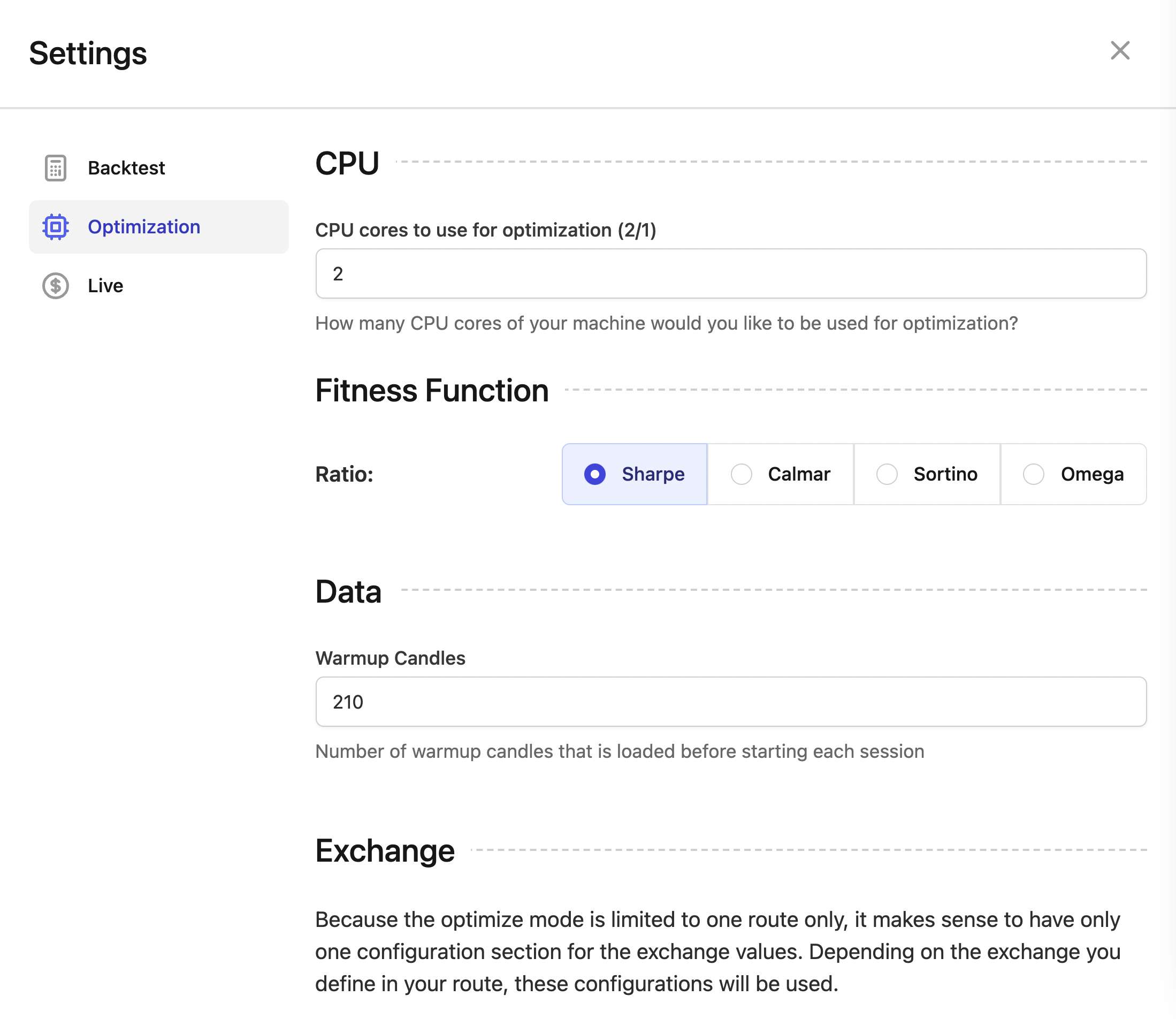
Go ahead change it as you like. Changes are automatically saved which is why there's no "Save" button.
WARNING
Changing the settings will not affect running sessions. If you have one, stop and start it again for the changes to take affect.
Note: you do NOT need to stop and start Jesse itself after changing these settings.